

Resources
What to do next.
Most people have never had a reason to learn about any of this before needing it right now. If you’re dealing with a biohazard situation for the first time, here’s what actually matters — in order.
What’s easy to overlook: registration numbers, matching names and addresses, proof of insurance, these aren’t just formalities. They’re often exactly what government reimbursement programs like the victims fund, and your own insurance provider, require before they’ll actually pay a claim, and that usually isn’t realized until much later.
Step 1
Don’t wait — speed matters here.
Decomposition, contamination, and odor don’t stay contained. The longer a biohazard situation sits, the further it spreads into flooring, subflooring, drywall, and HVAC systems — turning what could have been a contained cleanup into a much larger, much more expensive repair.
Insurance companies generally expect policyholders to act promptly and mitigate further damage. Waiting can complicate a claim even when the original incident was clearly covered.
Why the delay is costly
Every day a contaminated area goes untreated, the affected footprint tends to grow — and costs scale with it, not in a straight line. What starts as a single room can become a subfloor and drywall replacement.
Step 2
Understand what actually counts as biohazard material.
Not everything that looks unpleasant is legally regulated, but a lot more qualifies than most people expect: blood and bodily fluids, tissue, decomposition-affected material, human or animal waste, and items that have absorbed any of the above (carpet, upholstery, mattresses, flooring).
If your situation involves any of these, it isn’t a job for a general cleaning service or a DIY trash bag — it’s a job for a company registered to handle regulated medical waste.
California law, in plain terms
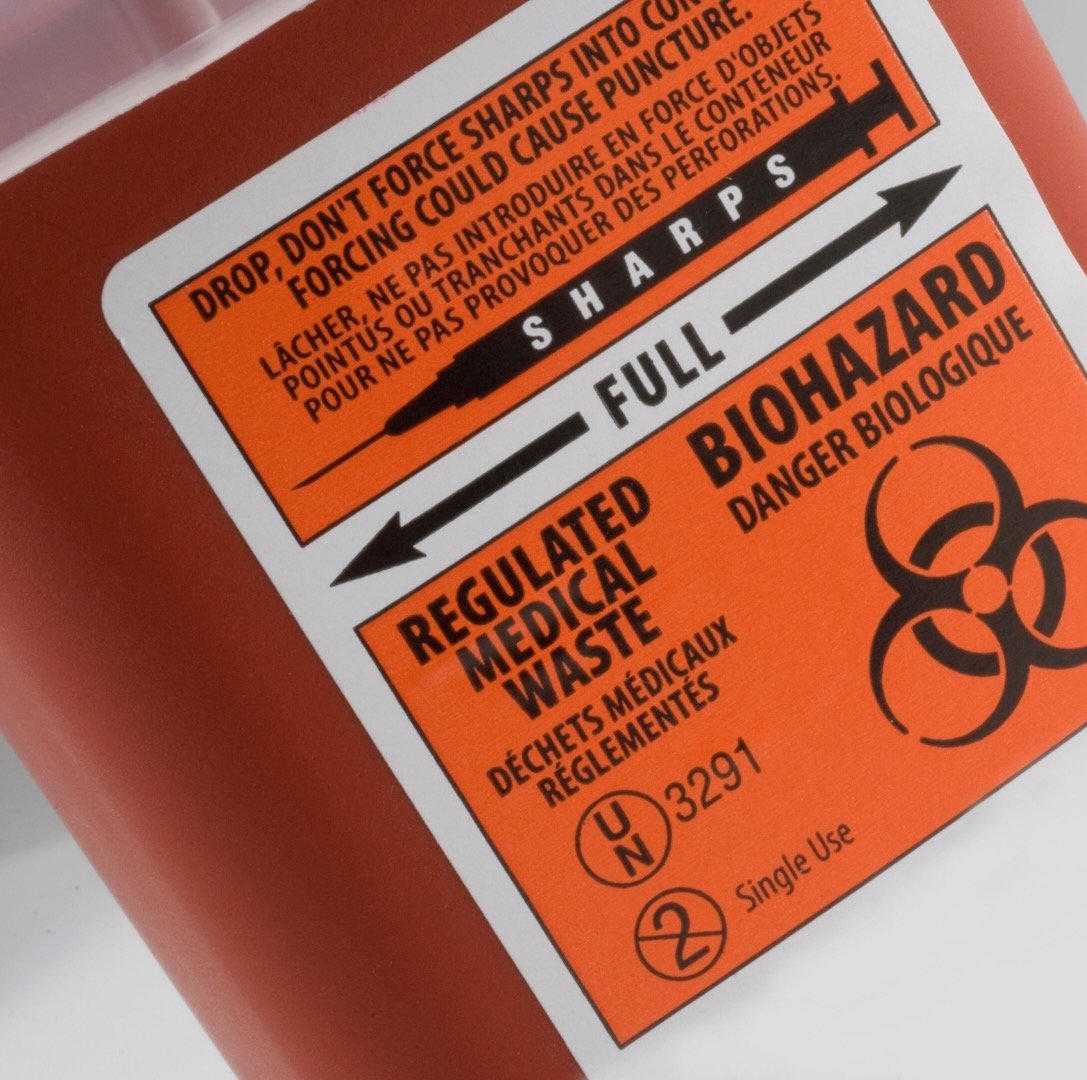
Biohazard and regulated medical waste can never go in regular household trash, a standard dumpster, or a landfill. It must be packaged, transported, and destroyed by a company registered with the California Department of Public Health’s Medical Waste Management Program — the same requirement that applies to hospitals and doctors’ offices.
Step 3
Confirm they're actually local.
A company can look local online without being local at all. Search rankings, “areas we serve” pages, and even local-sounding business names don’t guarantee a company is physically based near you, or licensed to operate here.
Ask directly where their team and equipment are physically located, and how quickly they can realistically be on-site. A company dispatched from two or three hours away tells a very different story about response time than one that’s actually down the street.
A simple gut check
Ask for an honest estimated arrival time before you commit. A company that’s genuinely local can usually give you a specific window, not a vague “we’ll get there when we can.”
Step 4
Verify their registration is actually active.
A registration number means little if it’s expired, or if it doesn’t actually belong to the company standing in front of you. Both are things you can check yourself, in a few minutes.
CDPH: name and address matter
The CDPH’s registered practitioner list shows the business name and physical address tied to each registration. Confirm both match, not just the registration number. A number alone can be copied onto any website; a matching name and address are much harder to fake, and tell you whether the entity you’re about to pay is actually the one that’s registered, and that the registration is currently active rather than lapsed.
IICRC: use their locator, the right way
The IICRC (Institute of Inspection, Cleaning and Restoration Certification) is the organization behind the certifications you’ll see companies reference, so it’s worth checking directly rather than taking a badge at face value. Visit the IICRC’s public locator, select Restoration, then narrow to Trauma and Crime Scene. The map will show which firms are currently certified near you, by address, a more reliable check than trusting a badge displayed on a website.
The IICRC also publishes a list of invalid firms, companies that have lost certification, worth a quick check if anything feels off.
Step 5
Ask about insurance, specifically.
General liability insurance, the kind most contractors carry, isn’t the same as coverage built for biohazard and trauma work. Ask any company whether their insurance specifically covers this type of work, and ask to see proof.
This is a standard, reasonable request, not an insult. A company confident in its coverage will have documentation ready to share, on the spot.
We carry insurance specific to biohazard and trauma cleanup, beyond standard contractor liability coverage, and we’re glad to provide proof before any work begins.
Step 6
Watch for search-engine tricks.
Many of the listings you’ll find through a quick search are perfectly legitimate. Some aren’t. A common pattern: a general cleaning or contracting company that ranks well locally through search engine optimization, but subcontracts the actual regulated work to someone else entirely, or isn’t licensed to perform it at all.
This matters because you may think you’re hiring a specialist, when you’re actually hiring a general business that hands the job to a third party you never vetted. The IICRC locator and CDPH registered list from Step 4 are the most reliable way to confirm exactly who is licensed to do this work near you, regardless of how polished a company’s website or search ranking looks.
Step 7
Know what a legitimate quote should include.
A trustworthy company won’t just give you a price. They’ll explain the work.
What to expect in writing
- A clear, step-by-step explanation of the process
- What technologies and chemicals will be used, and why
- How they’ll confirm the area is actually clean once work is done, not just a visual check
- An itemized scope of work before anything begins
A reasonable standard to expect
If a company can’t explain how they’ll verify their own work once it’s done, that’s worth pausing on. Testing and documentation shouldn’t be an upsell, it should be part of the baseline process every time. The same goes for anyone who’s vague about the chemicals or methods they use, if they can’t explain what they’re using and why, they likely haven’t standardized their own process either.
Step 8
Loop in your insurance early.
Most insurance and government reimbursement programs expect the cleanup to be handled quickly and by a properly credentialed company, with documentation to match. Ask any company you’re considering whether they provide an itemized scope of work, before-and-after documentation, and disposal records — adjusters typically ask for all three.
We provide a documented, itemized process built to support insurance claims and government reimbursement programs, and we’ll tailor documentation to what your adjuster or program requires.
Step 9
Financial help may be available.
Most people don’t know this exists until they need it: California, along with every other state, runs a program that can reimburse crime victims for the cost of crime scene cleanup. It’s a real benefit, funded through the state, not something you have to pay for entirely out of pocket if you qualify.
California Victim Compensation Board (CalVCB)
CalVCB can reimburse eligible victims of violent crime for a range of crime-related expenses, including crime scene cleanup, medical costs, mental health counseling, funeral expenses, and lost income.
- Website: victims.ca.gov
- Phone: (800) 777-9229
- Apply online: online.victims.ca.gov
To qualify, the expense must result directly from a qualifying crime, and other reimbursement sources (such as insurance) generally need to be used first. Most applicants have up to seven years to file.
Crime scene cleanup specifically is reimbursed up to $1,709, separate from the overall $70,000 per-application cap that applies across all expense types combined. CalVCB will only reimburse a provider registered with the CDPH as a Trauma Scene Waste Management Practitioner, and the registration number and address on file must match the company that actually performed the work, another reason the verification steps above matter well beyond the day of the cleanup.
Local Help Applying
You don’t have to navigate this alone. The Riverside County Division of Victim Services can help with your application directly.
Phone: (760) 863-8408
Outside California
Every state runs its own victim compensation program. The National Association of Crime Victims Compensation Boards maintains a directory of state programs, including contact information for wherever you’re located.
Website: nacvcb.org/state-information
Step 10
Know what a compliant process should look like.
A legitimate company follows a documented sequence, not an improvised one. Here’s what to expect at minimum.
Assessment
A clear scope of work and estimate, provided before anything begins.
Containment
The area is contained to prevent spread to unaffected spaces.
Remediation
Affected material is removed, cleaned, and fully sanitized to CDPH and OSHA standards.
Disposal
Handled through a contracted, government-registered medical waste transporter — the same companies that manage waste for hospitals and doctors’ offices, not a regular hauler.
Verification
Documented and tested, not just a visual check.
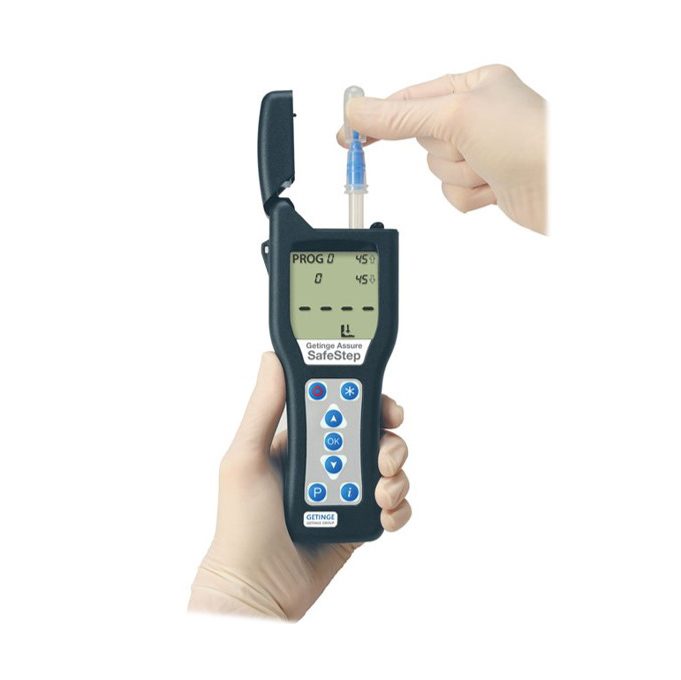
An ATP (adenosine triphosphate) meter measures biological residue left on a surface after cleaning — the same industry-standard method infection-control teams and forensic cleaners rely on to confirm a surface is measurably sanitized, not just visibly clean.
This is exactly how we handle every job — see the full walkthrough on our Bio-hazard & Trauma page.
Our Own Credentials
Since you should be checking anyway.



FAQ
Frequently Asked Questions
How quickly can you respond?
We’re available 24/7, and in the large majority of cases can begin work immediately after our in-person assessment.
What if more contamination is found once you start?
We’ll notify you immediately and provide a revised estimate before doing any additional work, except where immediate action is legally required.
Is this confidential?
Always. Unmarked vehicles, no branded clothing or equipment, and we don’t use identifiable images of your property without your separate written consent.
Do you subcontract any of your work?
No. Every job is performed by our own trained, certified team.
Can I just put things in a regular dumpster myself?
No — biohazard material (blood, bodily fluids, decomposition-affected items) is legally regulated waste in California and cannot go in regular trash or a standard dumpster, regardless of who removes it.
Still have questions?
Reach out directly — every conversation is confidential.